


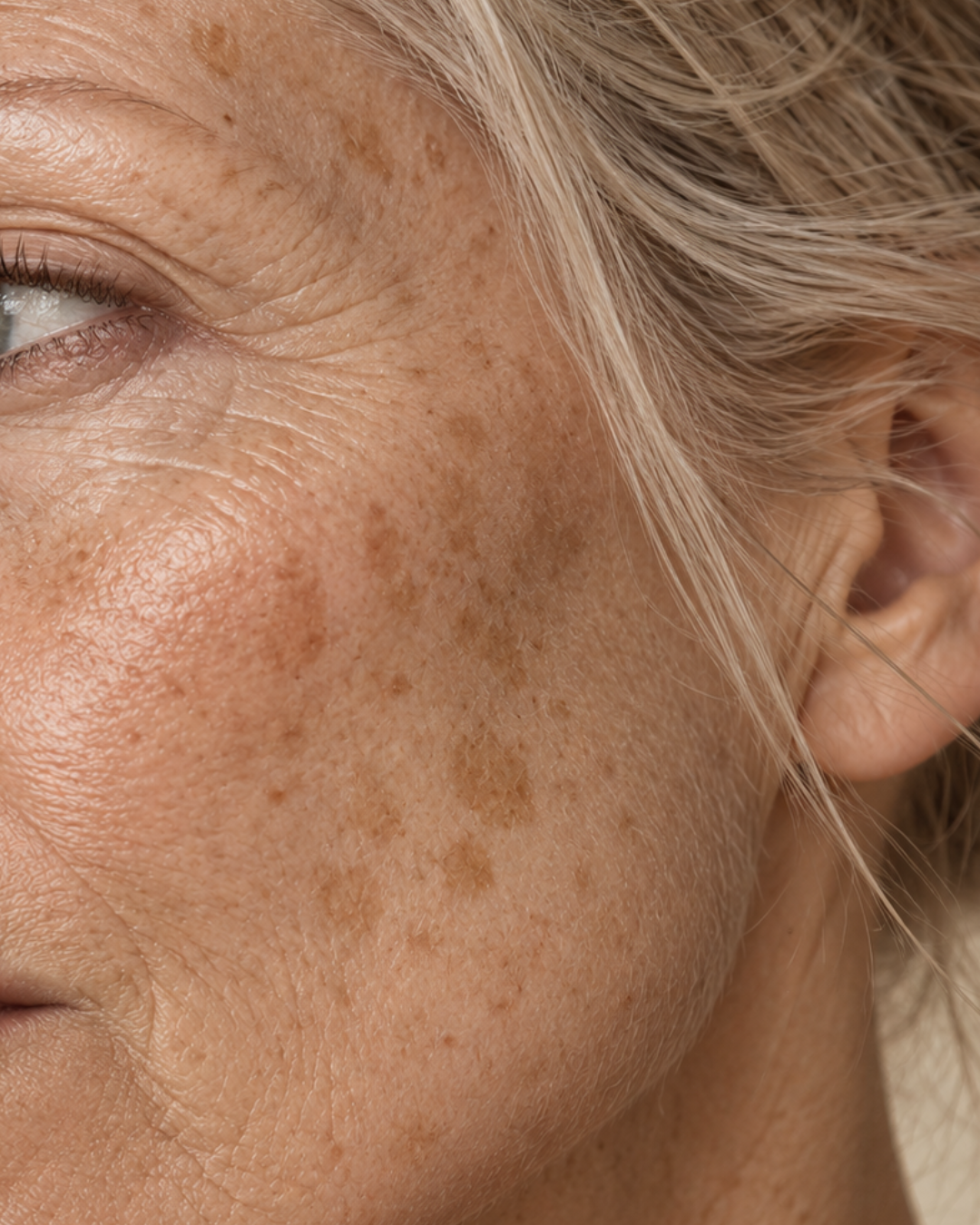
Dermatologist-led sunspot treatment targets sun damage, reduces pigmentation, and supports healthier, more even-toned skin.

Lentigo, commonly known as sunspots or age spots, develops as a result of cumulative UV exposure and can appear as flat, brown patches on sun-exposed areas of the skin. Our dermatologist-led sunspot treatment focuses on assessing pigmentation, identifying sun-related skin changes, and determining appropriate treatment options tailored to your skin’s needs. Beyond improving the appearance of dark spots and uneven skin tone, our approach emphasizes skin health, sun damage awareness, and the importance of ongoing dermatological care.
Prolonged sun exposure can lead to lentigines (sunspots), persistent pigmentation, and changes in skin texture over time. A dermatologist can distinguish common signs of sun damage from lesions that may need closer examination before recommending treatment. Addressing these concerns involves more than improving skin appearance; it also means taking a proactive approach to skin health, monitoring changes, and reducing further UV-related damage.
Lentigo treatment is generally well tolerated, although comfort levels depend on the type of treatment recommended. Some procedures may cause mild tingling, warmth, or temporary sensitivity, while others involve little to no discomfort. Your dermatologist will explain what to expect based on your skin’s needs and the recommended approach.
The length of a treatment session depends on the type of treatment recommended and the area being addressed. Appointments may take anywhere from 15 to 60 minutes, including time for skin assessment and preparation. Your dermatologist can provide a more accurate time estimate based on your individual treatment plan.
After Lentigo treatment, your skin may experience temporary redness, sensitivity, mild swelling, or dryness, depending on the type of treatment performed. Some treatments may also cause light peeling or dark spots to temporarily appear more noticeable before gradually fading. Recovery time varies, and your dermatologist will provide personalized aftercare instructions to support healing and help protect your skin. Consistent sun protection is especially important following treatment to maintain results and minimize further UV damage.
Not everyone may be an ideal candidate for Lentigo treatment, as eligibility depends on the type of treatment being considered and the condition of your skin. Individuals with active skin infections, open wounds, significant skin irritation, or certain underlying skin conditions may need to postpone treatment. Recent sunburn, excessive tanning, certain medications, or a history of abnormal skin healing may also affect suitability. Any suspicious or changing spots should be evaluated by a dermatologist before cosmetic treatment is considered. A consultation will help determine the safest and most appropriate approach for your skin.
what to expect
Consultation
During your consultation, your dermatologist will assess your skin, discuss your concerns, and review any visible signs of sun damage. They may ask about your medical history, skincare routine, sun exposure, and any changes you have noticed in your skin. This appointment is also an opportunity to identify any areas that may require further evaluation and discuss the options best suited to your needs. You will have the opportunity to ask questions and gain a clearer understanding of the next steps for your skin health.
Treatment
During your treatment appointment, your dermatologist will follow the plan established during your consultation, taking into account your skin type, concerns, and overall skin health. The area being addressed will be assessed and prepared as needed, and you will be guided through each step of the process. Depending on the treatment selected, you may experience temporary warmth, tingling, or mild discomfort. Before your appointment concludes, you will receive personalized aftercare instructions and guidance on protecting your skin as it recovers.
Post Treatment
Following your treatment, your skin may experience temporary redness, sensitivity, dryness, or mild swelling, depending on the procedure performed. Some treatments may also cause light peeling or temporary changes in pigmentation as the skin heals. Your dermatologist will provide personalized aftercare instructions, including recommendations for gentle skincare and daily sun protection. Recovery time and visible results will vary depending on the treatment and your skin’s individual response. Follow-up appointments may be recommended to monitor your progress and support your ongoing skin health.
Follow up
Your follow-up appointment allows your dermatologist to evaluate how your skin has responded to treatment and monitor your overall skin health. Any changes in pigmentation, texture, or other areas of concern will be reviewed, and you can discuss your recovery, results, and any questions that have come up since your visit. Based on your progress, your dermatologist may recommend additional care or adjustments to your skincare routine. Follow-up visits also provide an opportunity to monitor any ongoing concerns and help maintain your skin’s long-term health.
Maintenance
Maintaining your results involves protecting your skin from further sun exposure and following a consistent skincare routine suited to your needs. Your dermatologist may recommend periodic skin assessments to monitor existing sun damage, identify new areas of concern, and evaluate your overall skin health. Depending on your skin’s condition and the treatment received, additional sessions or ongoing professional care may be suggested. Daily broad-spectrum sunscreen use and regular skin monitoring are essential parts of maintaining healthy skin over time.
During your consultation, your dermatologist will assess your skin, discuss your concerns, and review any visible signs of sun damage. They may ask about your medical history, skincare routine, sun exposure, and any changes you have noticed in your skin. This appointment is also an opportunity to identify any areas that may require further evaluation and discuss the options best suited to your needs. You will have the opportunity to ask questions and gain a clearer understanding of the next steps for your skin health.
Your follow-up appointment allows your dermatologist to evaluate how your skin has responded to treatment and monitor your overall skin health. Any changes in pigmentation, texture, or other areas of concern will be reviewed, and you can discuss your recovery, results, and any questions that have come up since your visit. Based on your progress, your dermatologist may recommend additional care or adjustments to your skincare routine. Follow-up visits also provide an opportunity to monitor any ongoing concerns and help maintain your skin’s long-term health.
During your treatment appointment, your dermatologist will follow the plan established during your consultation, taking into account your skin type, concerns, and overall skin health. The area being addressed will be assessed and prepared as needed, and you will be guided through each step of the process. Depending on the treatment selected, you may experience temporary warmth, tingling, or mild discomfort. Before your appointment concludes, you will receive personalized aftercare instructions and guidance on protecting your skin as it recovers.
Following your treatment, your skin may experience temporary redness, sensitivity, dryness, or mild swelling, depending on the procedure performed. Some treatments may also cause light peeling or temporary changes in pigmentation as the skin heals. Your dermatologist will provide personalized aftercare instructions, including recommendations for gentle skincare and daily sun protection. Recovery time and visible results will vary depending on the treatment and your skin’s individual response. Follow-up appointments may be recommended to monitor your progress and support your ongoing skin health.
Maintaining your results involves protecting your skin from further sun exposure and following a consistent skincare routine suited to your needs. Your dermatologist may recommend periodic skin assessments to monitor existing sun damage, identify new areas of concern, and evaluate your overall skin health. Depending on your skin’s condition and the treatment received, additional sessions or ongoing professional care may be suggested. Daily broad-spectrum sunscreen use and regular skin monitoring are essential parts of maintaining healthy skin over time.


How much does a microneedling treatment cost?
To assess your needs and provide an accurate price estimate for your personalized treatment, we recommend scheduling a free, no-obligation consultation with a Surface expert. We recognize that each individual is unique, so we tailor our treatment plans to meet your specific needs.
Revitalize your skin with microneedling for just
$250 per session (regularly $400).
Limited-time offer for new clients only.
Consultation required. Valid through September.
Why Surface?
Expert care from board-certified dermatologists and their team using advanced technology and personalized treatment plans. Our comprehensive services and proven results ensure you receive the highest quality care for all your skin needs.



Recommended Products
Here are some additional products and services that complement the benefits of Retinol Skin Brightener and enhance your skincare routine.


Your skin journey starts here. Reach out anytime for more information and to book your consultation. We’d love to hear from you.
